4:45am! A terribly early day, but we had to do it. Da was there to pick us up and transport us to the ticket office. The office was buzzing- hundreds of people trying to get their tickets for Angkor Wat. We were directed to a long line up and waited and waited. It was pretty silly as we were in the line up for the one day tickets, where as the counters for the 3 day ad 5 day tickets had no line up at all, but they would not take anyone who needed a one day tickets. So we waited and about 40 minutes later were at the front. We had our photos taken (the tickets are very specific!) and then rode off towards the sunrise. We arrived along with hoards of people at the Angkor Temple. The light was beginning to peep through and we waited at the foot of the pool of water – which must be a big lake in the rainy season- for a sunrise glimpse of the Angkor Temples. The light revealed the temples bit but bit, but there were too many clouds to see the sunrise we had hoped to see. After an hour of waiting we thought we had seen the best we would see and headed into the temple itself. There were a lot of people but we didn’t feel overly crowded or rushed through. We wandered around the complex taking in the amazing architecture and beauty of these temples.
“Built between roughly A.D. 1113 and 1150, and encompassing an area of about 500 acres, Angkor Wat is one of the largest religious monuments ever constructed. Its name means “temple city.”
Originally built as a Hindu temple dedicated to the god Vishnu, it was converted into a Buddhist temple in the 14th century, and statues of Buddha were added to its already rich artwork. Sometime later it was turned into a military fortification. Today it is a UNESCO World Heritage where millions of tourists flock to each year.”
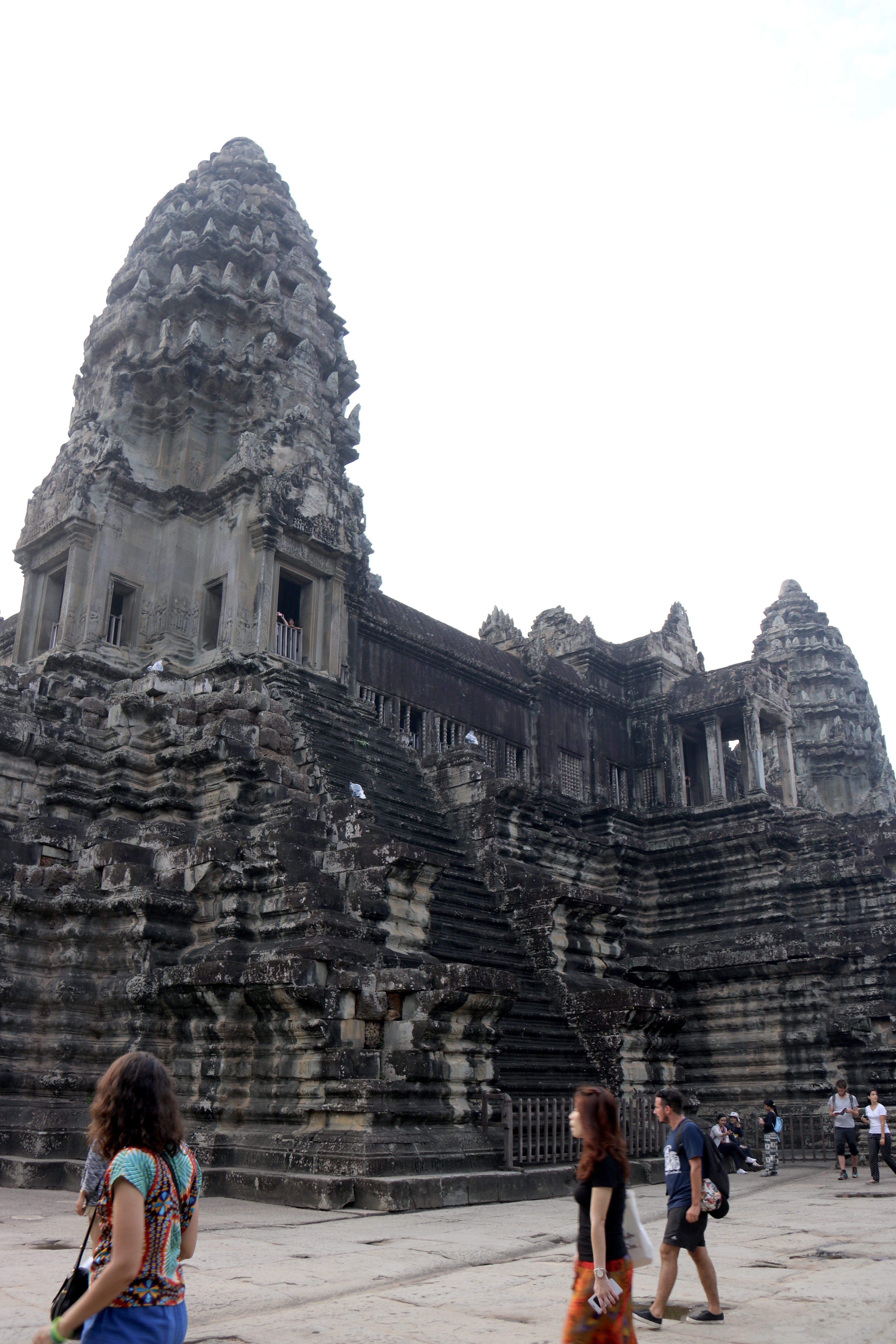
It’s 213-foot-tall central tower is surrounded by four smaller towers and a series of enclosure walls, a layout that recreates the image of Mount Meru, a legendary place in Hindu mythology that is said to lie beyond the Himalayas and be the home of the gods.
This main tower was where we headed. After wandering around the large complex we waited in line to climb up the main tower- they only allow a few people up at a time. You also have to have your shoulders covered and shorts covering your knees. The views from the top were stunning – the jungle surrounding the temple is rich with wildlife, temples and vegetation, a stunning view from the top. After a wander we made our way down the steep stairs (some people who are afraid of heights had problems getting up and down these stairs are so steep!) We made our way out of the temple complex, not before observing a local monkey steal a ladies lunch though; and back to Da. We had a boxed breakfast in the car that the hotel had prepared for us and Da drove us to a cafe where we ate our breakfast and had some coffee. Then we were ready for the next temple.
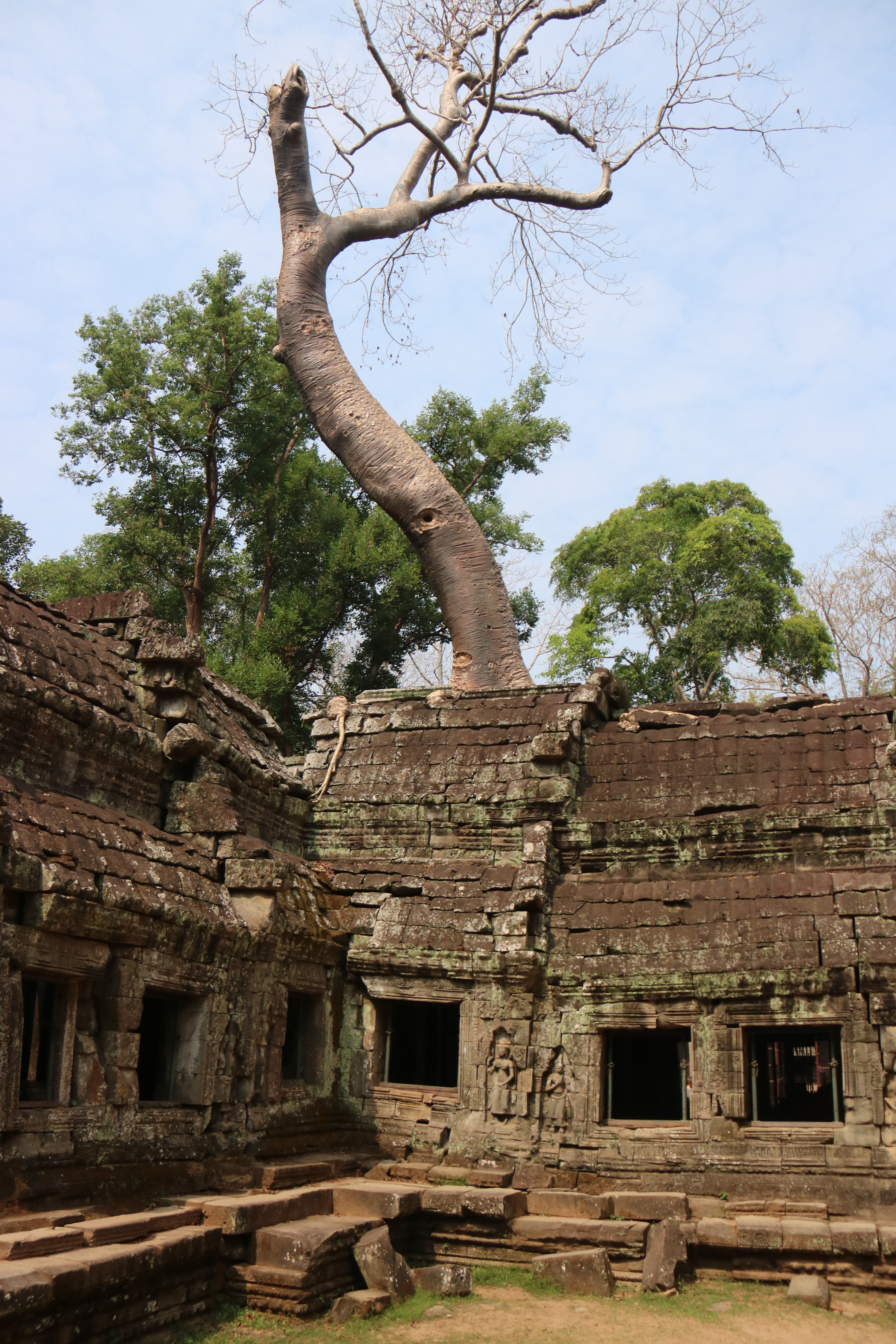
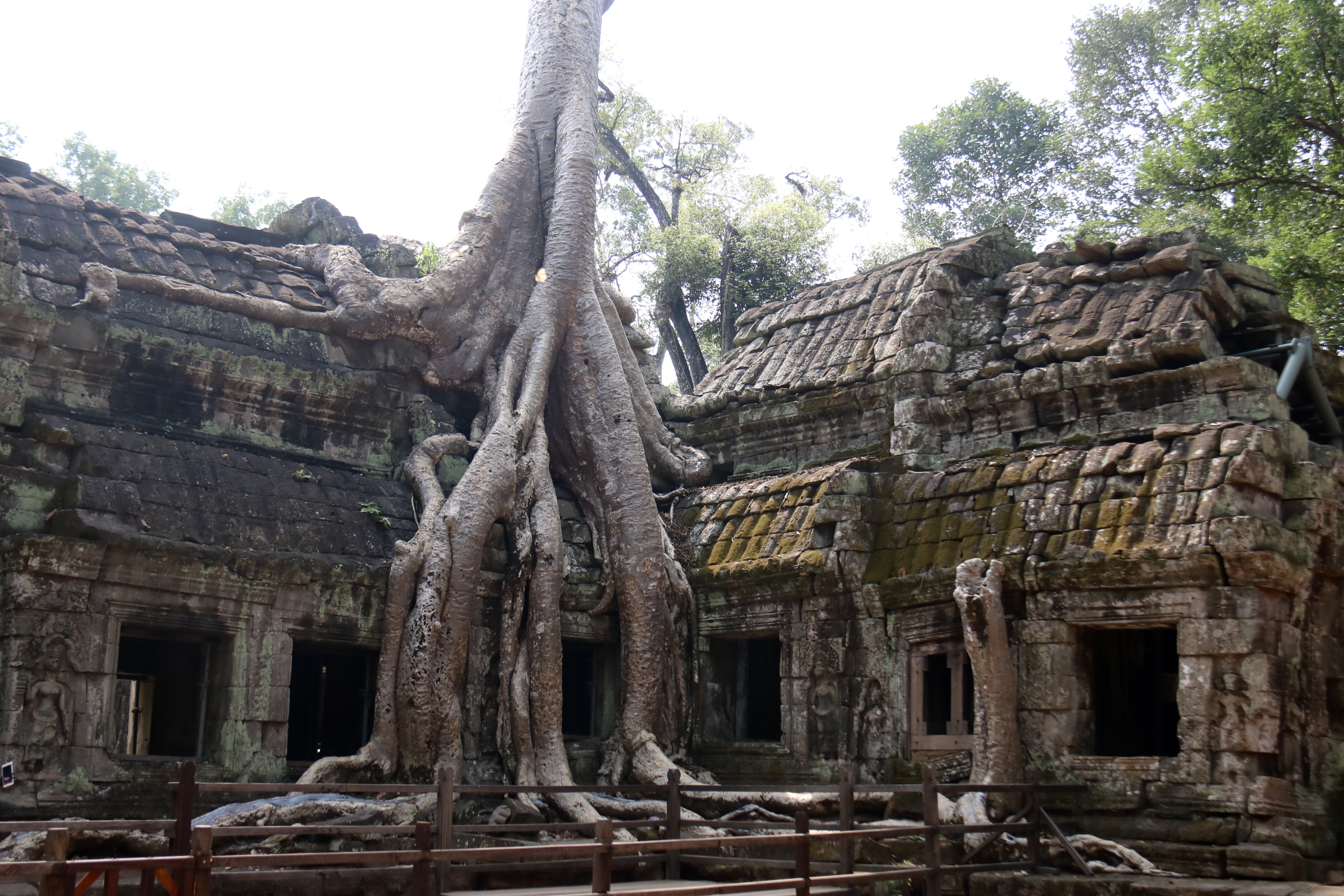
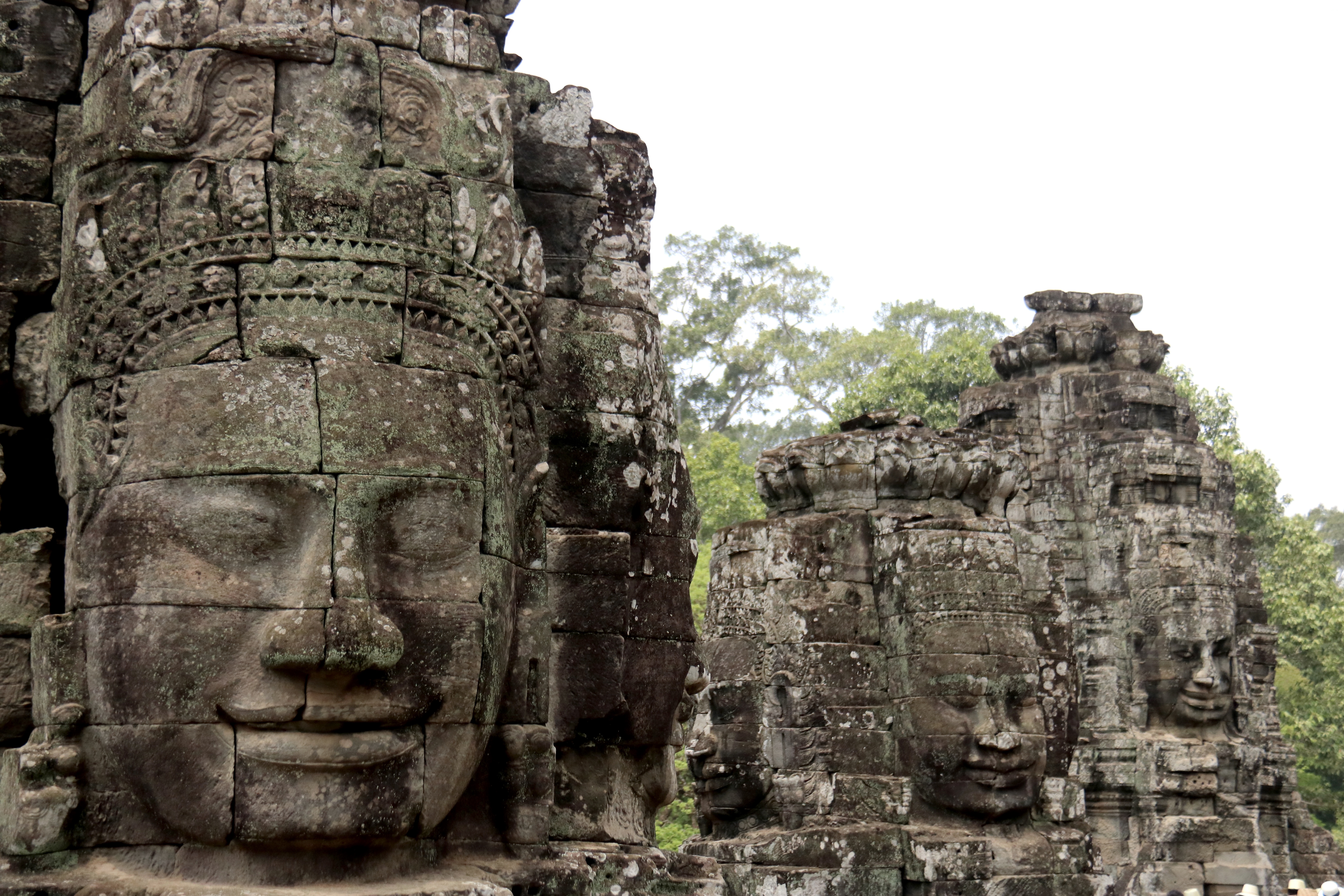
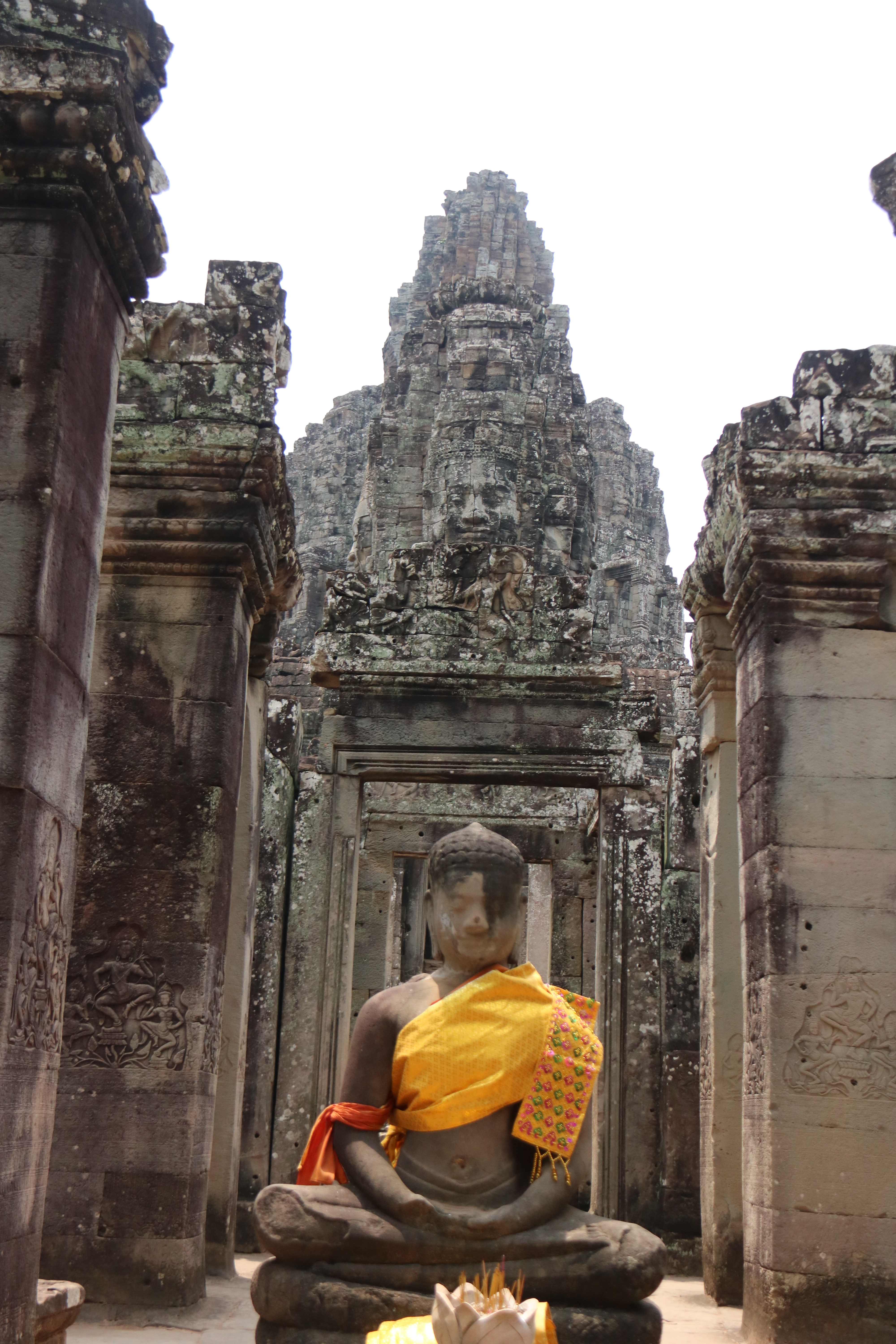
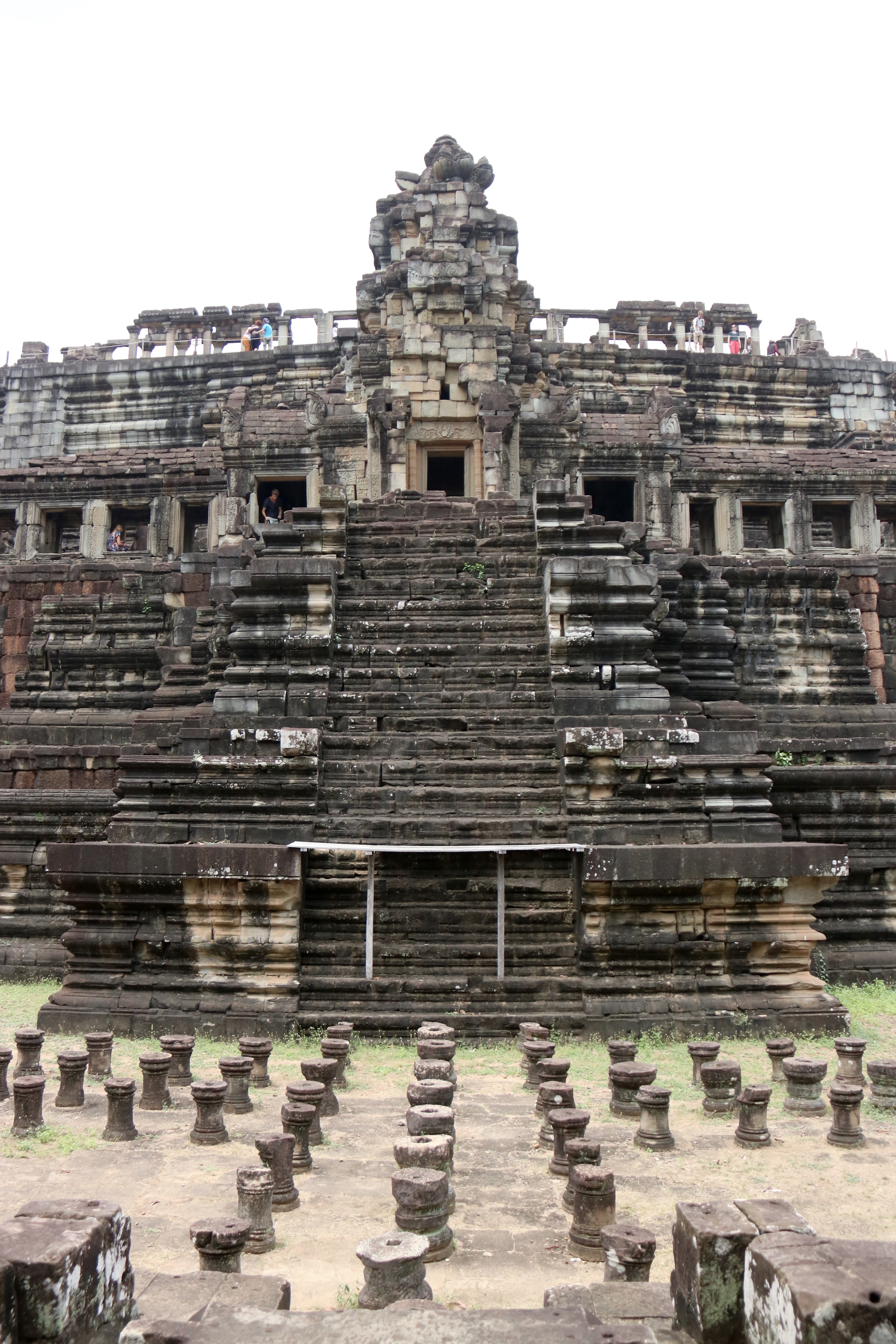
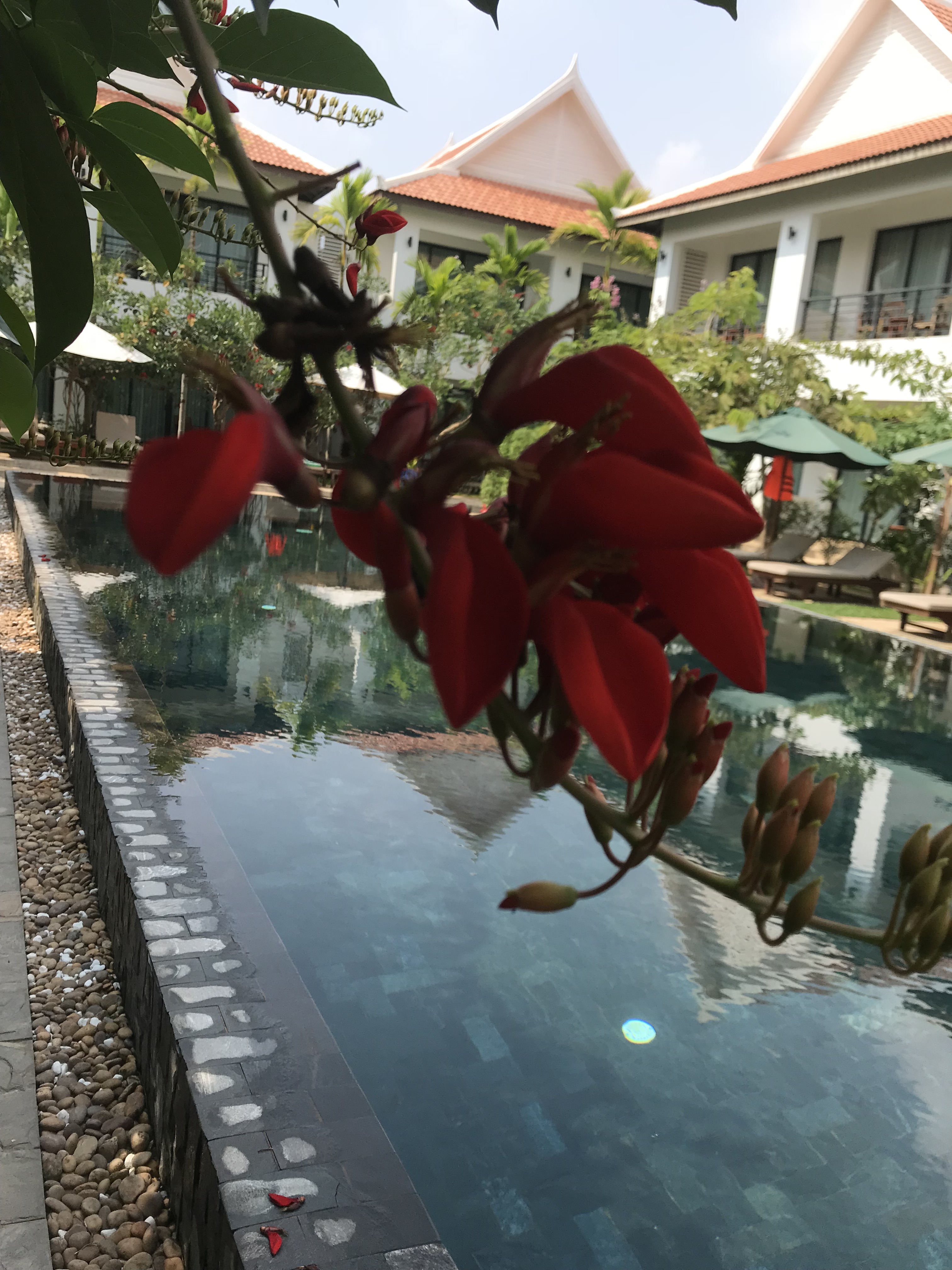
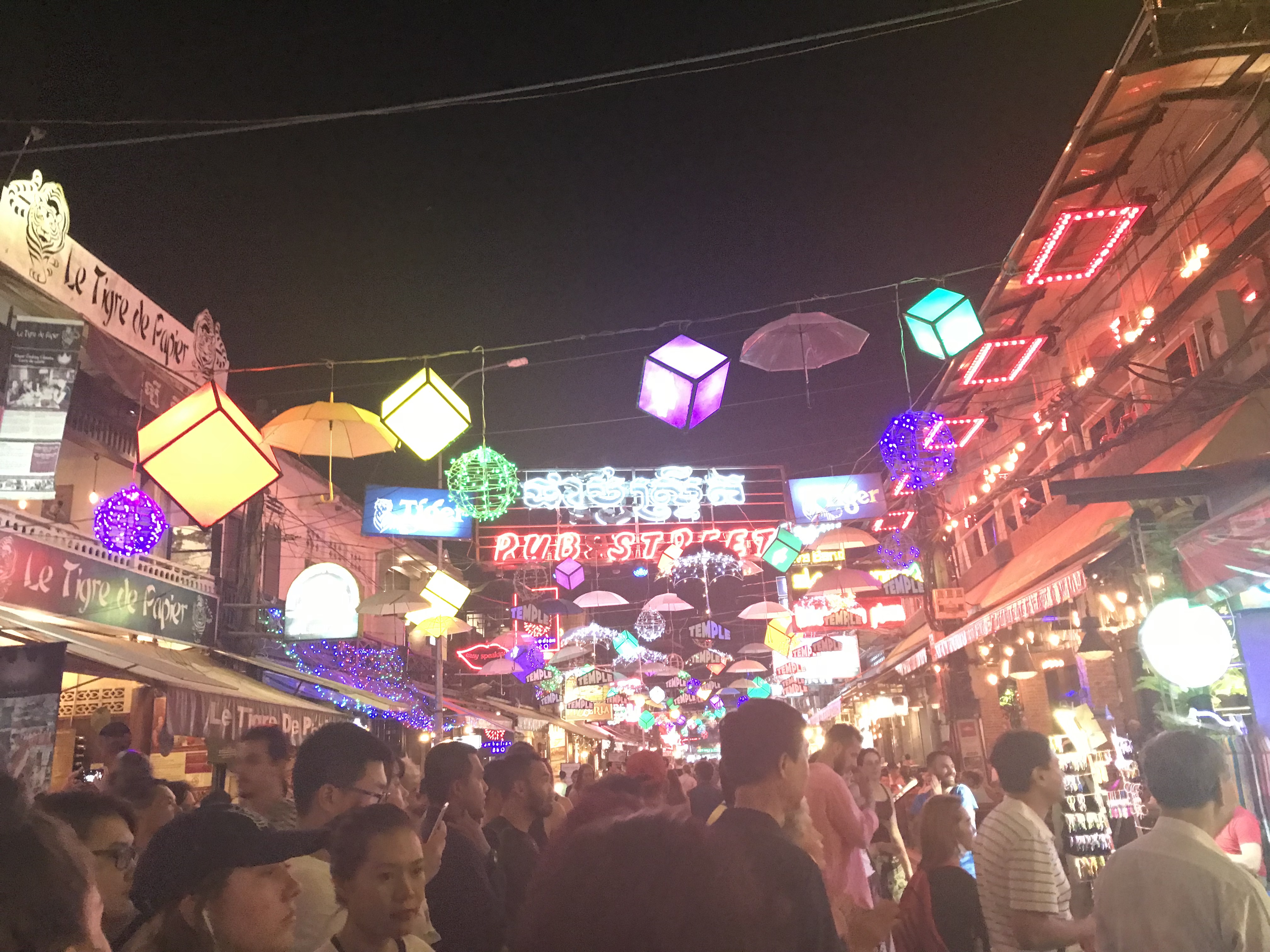
A short drive and we were at Ta Prohm (or the Tomb Raider Temple as it is popularly know as). Ta Prohn the modern name of this temple in the Angkor Complex was built in the Bayon style largely in the late 12th and early 13th centuries and originally called Rajavihara. It was built by the Khymer King Jayavarman VII as a Mahayana buddhist monastery and university. Unlike most Angkorian temples, Ta Prohm is in much the same condition in which it was found: the photogenic and atmospheric combination of trees growing out of the ruins and the jungle surroundings have made it one of Angkor’s most popular temples with visitors. We fell in love with this temple and the disarray in which we found it. You can see where there has been some restoration – mostly beams to hold up stone walls that trees have sprouted out of. The jungle really looks like it wants to take this temple back. We must have taken hundreds of photos. After an hour or so we met up with Da and then it was on to the next complex. There were so many temples we were glad Da was able to direct us to the best of them. Bayon Temple was our third temple and in the Angkor Thom couples. The Bayon Temple is one of the more famous, popular and beautiful of the structures in the Angkor Wat Archaeological Park. Situated just to the north of Angkor Wat itself, it was once at the centre of the ancient city of Angkor Thom. It is sometimes called Jayavarman’s Temple, in honour of the Khmer king who ordered its construction. It is best known for its many towers with gently smiling faces on each side. There are some 50 towers around the ruined temple, with over 200 faces showing varying degrees of erosion and wear. Each face is 4 metres high and is facing one of the cardinal directions of the compass. They all have the same serene smile, with eyes closed, representing the all-knowing state of inner peace, and perhaps even a state of Nirvana. There are also many complicated and exquisite bas-reliefs around the temple, with scenes depicting land and naval warfare, market scenes and others depicting the construction of the temple itself. There was so much to see we probably could have spent hours in each temple. We climbed to the tallest tower in this complex and we had a great view of all the faces. By this time it was getting really hot and we were all pretty sweaty and getting tired. But the mazing surroundings kept us captivated. After a meander through this temple we were able to walk to the temple next door. The Baphuon was the state temple of King Udayadityavarman II. The sandstone monument that was dedicated to Shiva is in the shape of a stepped pyramid.When the temple was converted into a Buddhist temple in the 15th century, part of the Baphuon was demolished and the stones used to build a Buddha image on the West end of the temple. The very large reclining Buddha image, which shape is difficult to make out, was never completed. This temple was not as impressive as the first 3 we had just seen, but it was also not as crowded and we got to see very cute monkeys on the walk over. The views from the top were impressive too. We made our way down and along the back of this temple and over to our final destination – the Royal Terraces, comprising of the Terrace of the Elephants to the South and the Terrace of the Leper King to the North. They face the parade grounds where processions, parades and other events were held. The King would watch the events standing on the Elephant terrace, which he also used as an audience hall to listen to the complaints and problems of the citizens of Angkor. Both terraces contain extensive sculptings of Devatas, Apsaras, mythological animals and demons. The Elephants terrace and the Leper King terrace have been pretty well restored and are impressive. We were all throughly exhausted, hot and tired by this time and it was time to head for lunch. Piling into the van Da made one more stop and the girls didn’t even want to get out- but we stopped at one of the gates to Angkor Thom. The south gate- there are a few gates around the complex and they are all very impassive, but this gate has statues lining the drive up and is very impressive. Lunch was a local spot – where once again the food was delicious. We then dragged our tired bodies to the hotel for naps and a dip in the stunning pool. A wonderful lazy afternoon was had by all. At 6 Da and his friend showed up in tuktuks for our ride in to town- such a fun way to get around. There are hundreds of these tuktuks all over. Downtown Siem Reap is happening at night! We saw that the market was still open and of course our shopping antenna were up. The stalls all had some great stuff and we managed to do some damage before ending up at Pub Street and all the action. The Red Piano had come up as a good eating spot and they were able to seat us near the open veranda (it was hot), so we had dinner here. The food was not too bad- but the local spots have been way more memorable. A little more shopping and then we ended our night with our feet dipped in tanks with hundreds of tiny fish eating all the dead skin. A wonderful day full of so much we dropped into bed and were all out like lights!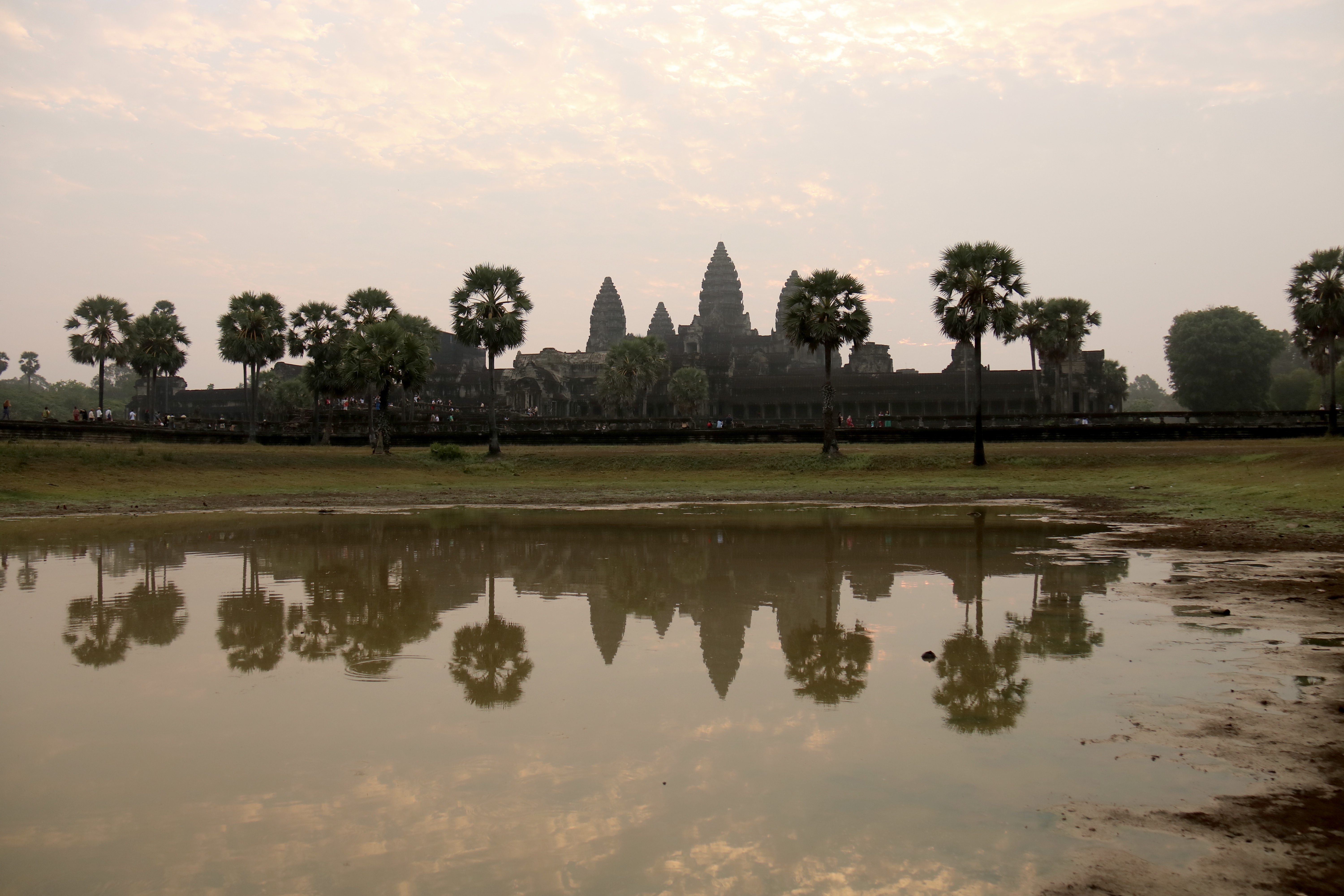
 Day by Day Travels
Leave a comment